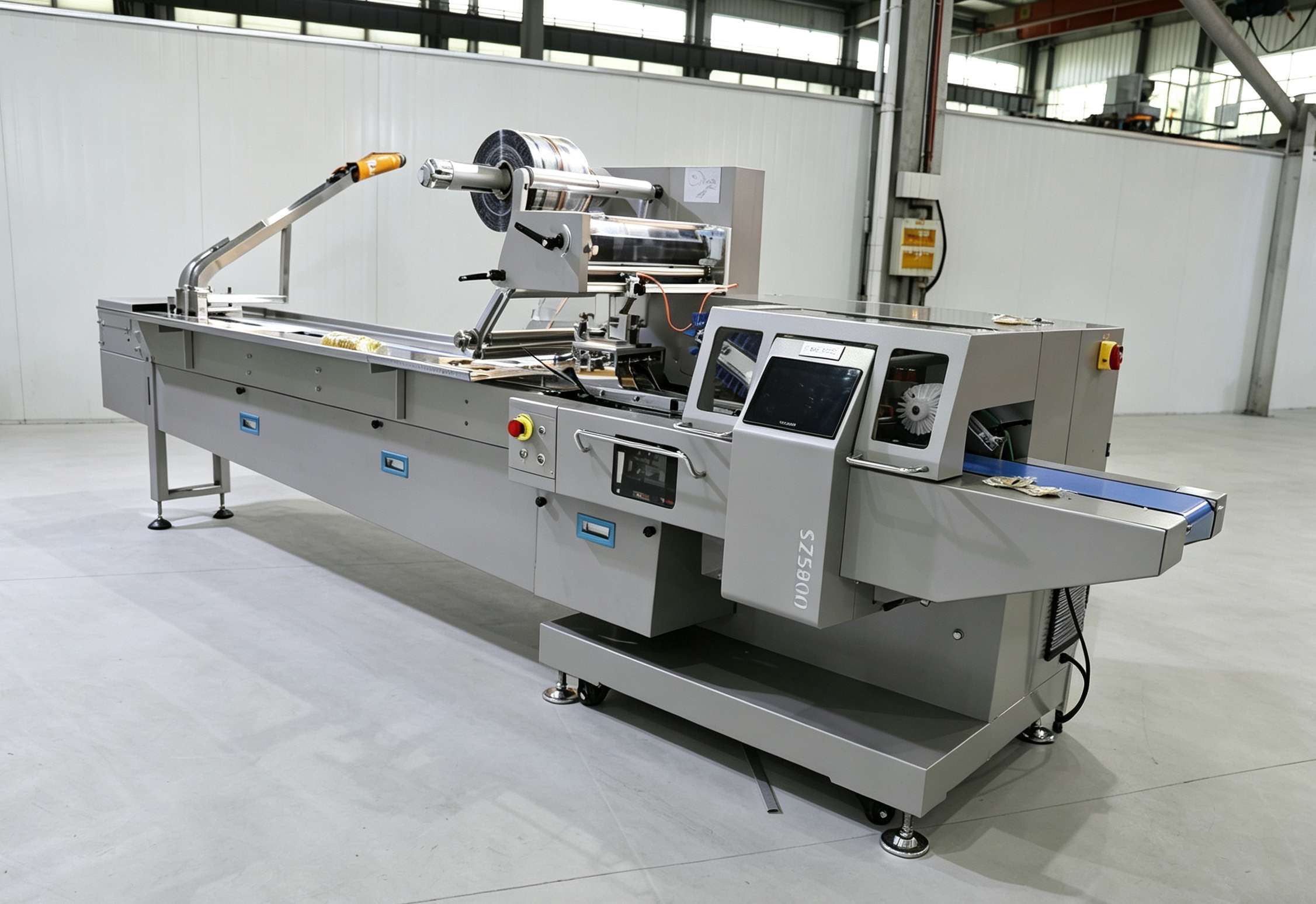
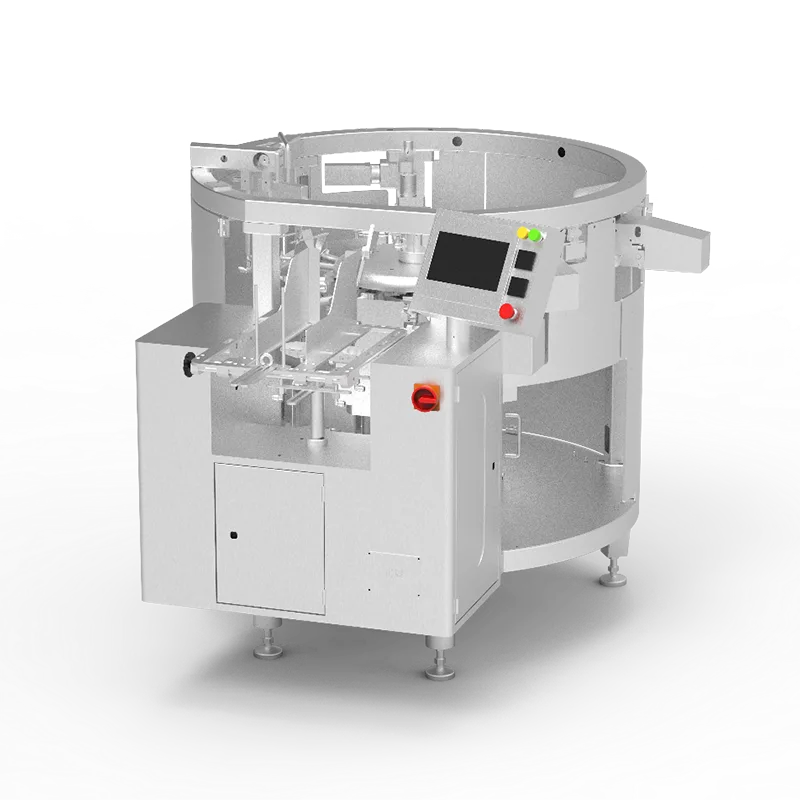
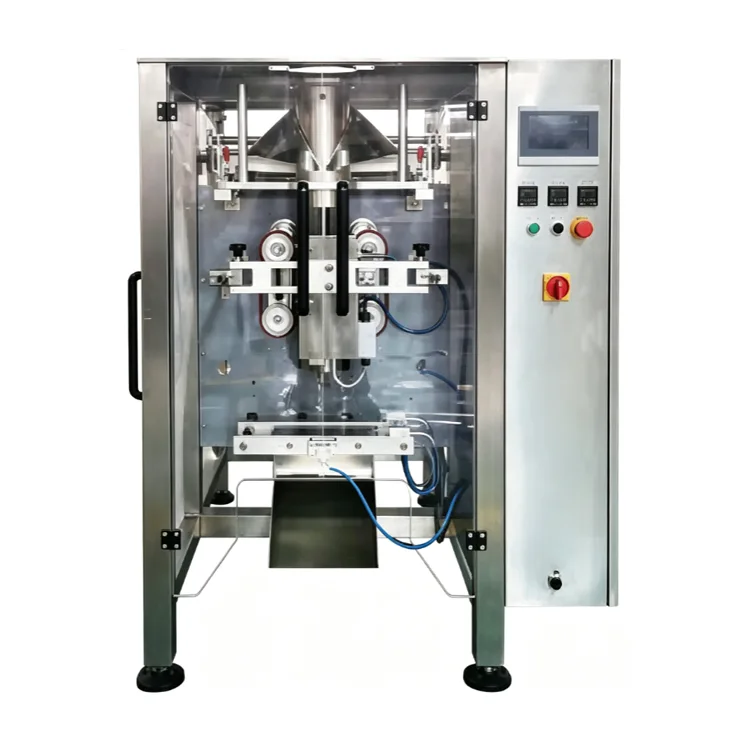
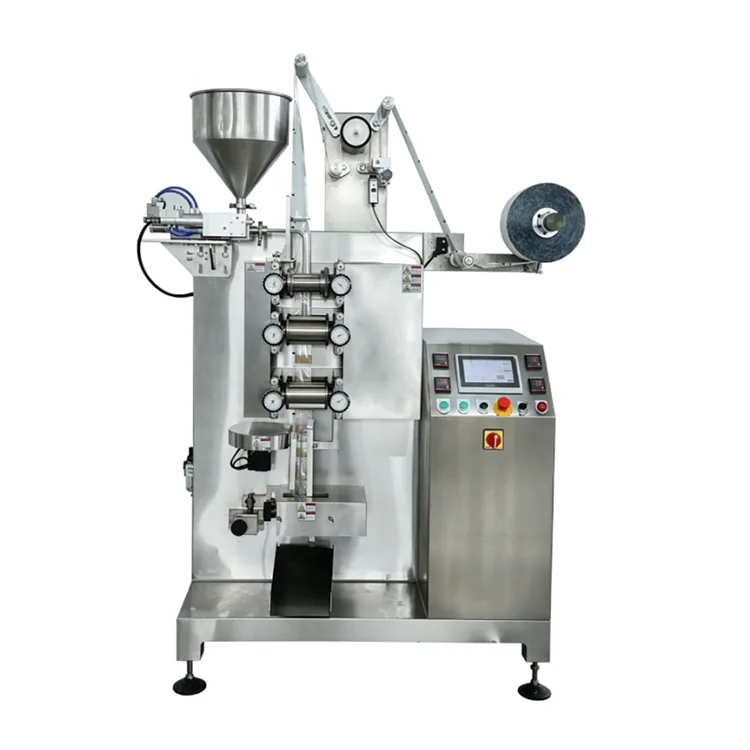
For liquid product manufacturers seeking faster, more consistent sachet packaging, Soonwell offers the High Speed Automatic Liquid VFFS Machine for Max Bag Length 150mm, an automated solution designed to form, fill, and seal small-format liquid and paste packages with coordinated servo control and convenient touchscreen operation.
Article Summary: A high-speed liquid vertical form-fill-seal (VFFS) machine combines film forming, liquid dosing, heat sealing, and cutting in one automated process. With a maximum bag length of 150 mm, Soonwell's machine is designed for small liquid sachets containing products such as cooking oil, soy sauce, vinegar, seasoning pastes, shampoo, and liquid soap. This guide explains its operating principle, technical specifications, key benefits, packaging applications, material compatibility, and the practical considerations buyers should evaluate before investing in liquid packaging equipment.
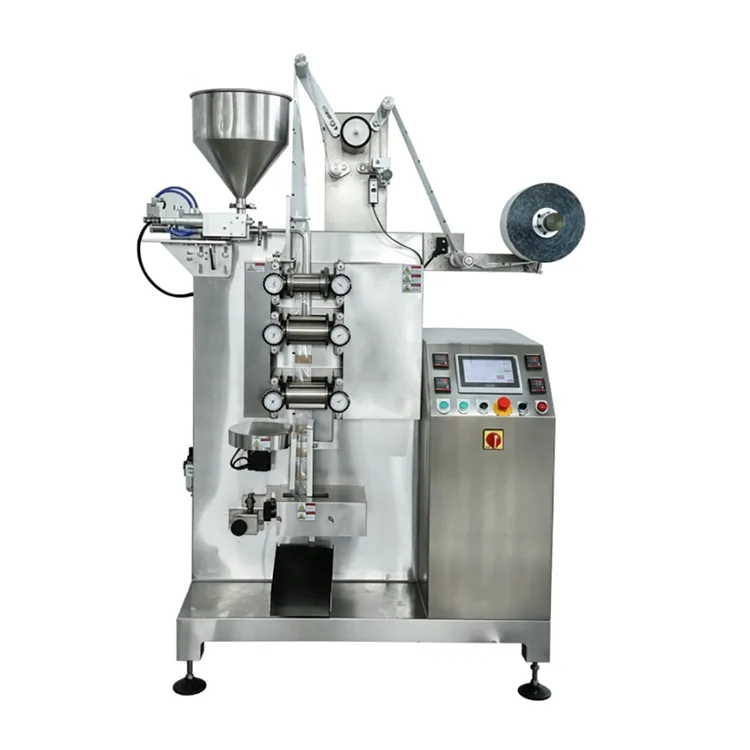
A vertical form-fill-seal machine is an automated packaging system that transforms flat rollstock film into finished packages. A liquid VFFS machine integrates a suitable dosing mechanism to fill the formed bags with measured quantities of liquid or paste before sealing them for storage, transport, or retail distribution.
The High Speed Automatic Liquid VFFS Machine for Max Bag Length 150mm is designed for small-format packaging applications. Its maximum bag length of 150 mm makes it suitable for compact sachets used for single servings, product samples, travel-sized personal care products, and individual portions of condiments.
According to the Soonwell product specifications, the machine features four servo-controlled operations, PLC centralized control, a touchscreen interface, and a fault-tracking alarm system.
These features are relevant to manufacturers who need repeatable packaging cycles, convenient parameter adjustments, and a streamlined production process. Actual output and filling performance depend on product viscosity, filling volume, packaging film, and operating conditions.
A liquid VFFS system carries out several coordinated operations within a continuous production workflow. Synchronization is particularly important for liquid products because inaccurate filling timing or inconsistent sealing can lead to leakage, product waste, and rejected packages.
The four-servo configuration coordinates film feeding, longitudinal sealing, horizontal sealing, and cutting. Independent motion control helps operators adjust process parameters to suit different packaging requirements while maintaining synchronization between machine functions.
Reviewing the technical data before purchasing packaging equipment helps buyers determine whether the machine matches their production requirements. The following table summarizes the published specifications for this Soonwell model.
| Specification | Published Details |
|---|---|
| Machine type | High-speed automatic liquid VFFS packaging machine |
| Applicable products | Sauces, liquids, and pastes |
| Packaging speed | 20–120 bags/min |
| Bag width | 40–100 mm |
| Bag length | 50–150 mm |
| Packaging forms | Three-side seal and four-side seal |
| Packaging weight or filling volume | 5–100 ml |
| Compatible film materials | PET/AL/NY, PET/PET, PP/PE, and CPP |
| Power supply | 220 V / 50 Hz |
| Power consumption | 5.5–6.5 kW |
| Air supply requirement | 0.6 MPa |
| Machine dimensions (L × W × H) | 1356 × 811 × 2018 mm |
| Approximate net weight | 620 kg |
| Control configuration | Four servo systems and PLC touchscreen control |
| Dispensing options | U-bomb pump, magnetic pump, mechanical pump, and other configurations |
Note: These figures are published product specifications, not a guarantee of output under every operating condition. Confirm the required filling volume, pump configuration, film compatibility, electrical supply, and sealing arrangement with the manufacturer before placing an order.
For buyers comparing alternative equipment, Soonwell also provides a range of vertical form-fill-seal packaging machines for different packaging formats and production needs.
Integrating bag forming, filling, sealing, and cutting reduces the need for separate manual operations. This can simplify production workflows and help manufacturers improve consistency across repeated packaging cycles.
The 150 mm maximum bag length is particularly relevant to manufacturers producing compact sachets rather than large liquid pouches. It allows buyers to focus on small-format applications without selecting a machine primarily designed for oversized packages.
The four-servo configuration provides coordinated control of the main packaging movements. Accurate synchronization is important when the machine must position film, dispense liquid, seal the package, and cut each sachet at the correct point in the cycle.
Servo control also supports adjustments to operating parameters. This is useful when changing bag dimensions or working with packaging films that require different sealing conditions.
The centralized PLC control system provides a practical interface for operating the machine and adjusting production settings. The touchscreen makes it easier for trained operators to monitor the packaging process and identify operating conditions that require attention.
An integrated fault-tracking alarm system can alert operators when a detected problem needs investigation. Prompt attention to alarms may help reduce unnecessary downtime and prevent minor issues from disrupting a production run.
Different liquid products behave differently during dispensing. Water-like liquids flow readily, while sauces, creams, and seasoning pastes may require a different pump configuration or filling speed.
The availability of different dispensing configurations helps buyers evaluate a setup suited to their products. However, compatibility should be confirmed through product samples and filling trials, particularly for viscous, particulate-containing, or temperature-sensitive formulations.
A straightforward mechanical structure can make routine inspection and cleaning more manageable. For liquid packaging, attention to the filling system is especially important because residue around nozzles, tubes, and product-contact components can affect hygiene and filling consistency.
Manufacturers should establish documented cleaning procedures, inspect seals and moving parts, and follow the recommended maintenance schedule to support reliable long-term operation.
Small liquid sachets are used in many industries where portability, controlled portions, and convenient distribution matter. A suitable VFFS machine can help manufacturers automate these packaging formats.
For example, a condiment producer supplying restaurants may need to package measured portions of soy sauce in individual sachets. An automated liquid VFFS system can combine filling and sealing in one workflow, helping reduce manual handling while supporting repeatable package dimensions.
The appropriate machine configuration still depends on the formulation, required portion size, packaging material, hygiene requirements, and target production volume. Product testing should be completed before confirming suitability for a specific application.
Packaging film selection directly affects seal strength, product protection, shelf life, package appearance, and production stability. A film that performs well with a dry product may not provide the required barrier properties or sealing performance for a liquid formulation.
The machine lists PET/AL/NY, PET/PET, PP/PE, and CPP among its compatible film materials. Buyers should verify the exact film structure, thickness, sealant layer, and intended application with the supplier, because performance depends on the complete material construction rather than the material name alone.
Important considerations include:
Before full-scale production, conduct filling and sealing trials using the actual product and film. Evaluate seal integrity, leakage, filling consistency, and package performance after handling and transport simulation. For products with specific shelf-life requirements, the complete packaging system should be validated accordingly.
Choosing a machine based on headline speed alone can lead to unnecessary costs or production limitations. A more reliable approach is to evaluate the complete packaging task and determine whether the equipment can meet both current and expected requirements.
| Selection Factor | Questions to Ask | Why It Matters |
|---|---|---|
| Bag dimensions | Are the required bag widths and lengths within the supported range? | Ensures the machine can produce the intended package format. |
| Filling volume | Does the required portion fall within the 5–100 ml range? | Helps confirm dosing suitability and filling-system configuration. |
| Product viscosity | Is the product thin, viscous, or prone to containing particles? | Determines the most appropriate dispensing mechanism. |
| Production output | Can the line meet the target number of acceptable bags per minute? | Supports realistic production planning. |
| Packaging film | Has the actual film been tested for forming and sealing? | Reduces the risk of leakage, wrinkles, and rejected packages. |
| Cleaning requirements | Can product-contact parts be cleaned according to the required procedures? | Supports hygiene and reduces cross-contamination risks. |
| Factory utilities | Are the required electrical supply and compressed-air capacity available? | Helps prevent installation delays and operating problems. |
| Future expansion | Will production volume or product variety increase? | Helps align the investment with long-term operating plans. |
Buyers should also request a product demonstration or sample test where possible. Ask the supplier to evaluate the actual liquid, desired filling volume, proposed film, and package dimensions before finalizing the machine configuration.
Even a well-designed automated packaging machine requires consistent maintenance. Liquid residue, worn sealing components, incorrect temperature settings, and unstable film movement can affect package quality and production uptime.
A practical maintenance program should include the following tasks:
Manufacturers should measure overall production performance using more than the machine's nominal speed. Actual output of acceptable packages also depends on filling stability, film changes, cleaning time, operator practices, and downstream handling capacity.
By monitoring these factors, production teams can identify bottlenecks and make informed adjustments to operating procedures. Consistent maintenance and operator training help preserve packaging quality as production demands change.
The maximum bag length is 150 mm, with a published adjustable bag-length range of 50–150 mm. The machine is intended for small-format liquid and paste sachets. Confirm the required bag dimensions and sealing format with Soonwell before ordering.
The published packaging speed is 20–120 bags per minute. Actual output depends on factors such as bag size, filling volume, product viscosity, film characteristics, and sealing requirements. Buyers should confirm expected production performance using their actual product and packaging materials.
Suitable applications include soy sauce, cooking oil, vinegar, seasoning pastes, shampoo, liquid soap, and similar compatible products. The appropriate pump and filling configuration should be selected according to the product's viscosity and dispensing characteristics.
The published compatible film materials include PET/AL/NY, PET/PET, PP/PE, and CPP. Final compatibility depends on the complete film structure, sealant layer, thickness, and product requirements. Conduct sealing trials before starting commercial production.
The four-servo configuration coordinates film feeding, longitudinal sealing, horizontal sealing, and cutting. This helps synchronize the major packaging movements and allows operating parameters to be adjusted for different packaging requirements.
Leak prevention starts with suitable packaging film, stable dosing, correctly adjusted sealing parameters, and clean sealing surfaces. Manufacturers should test finished sachets for seal integrity and leakage under representative production, handling, and transport conditions.
Confirm the bag dimensions, filling volume, product viscosity, film structure, sealing format, production target, power supply, compressed-air requirements, cleaning procedures, and available after-sales support. Providing product samples and packaging requirements helps the supplier recommend an appropriate configuration.
For manufacturers seeking to automate compact liquid packaging, the High Speed Automatic Liquid VFFS Machine for Max Bag Length 150mm offers an integrated approach to bag forming, filling, sealing, and cutting. Its published 20–120 bags-per-minute speed range, 5–100 ml filling range, four-servo configuration, and PLC touchscreen control make it a candidate for applications involving liquid condiments, sauces, personal care products, and other compatible formulations.
The best purchasing decision comes from matching the machine to the actual product, package dimensions, film structure, hygiene requirements, and production targets. Sample testing and clear technical communication can help buyers establish realistic performance expectations before installation.
If you are evaluating a liquid sachet packaging line, contact us at Soonwell to discuss your product characteristics, target filling volume, bag dimensions, and production goals. Our team can help you review the machine configuration and identify a suitable packaging solution for your manufacturing requirements.
Explore the product: High Speed Automatic Liquid VFFS Machine for Max Bag Length 150mm